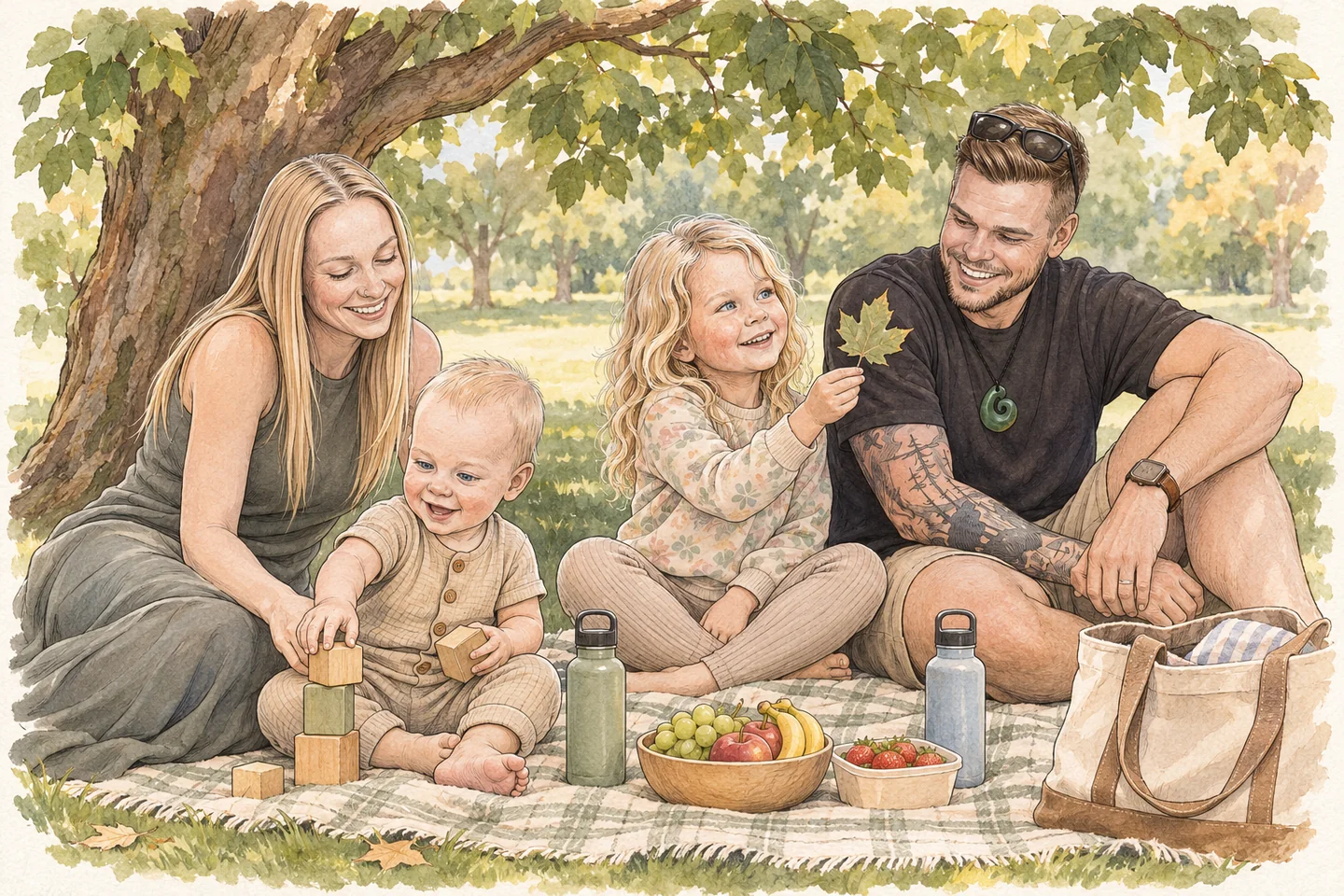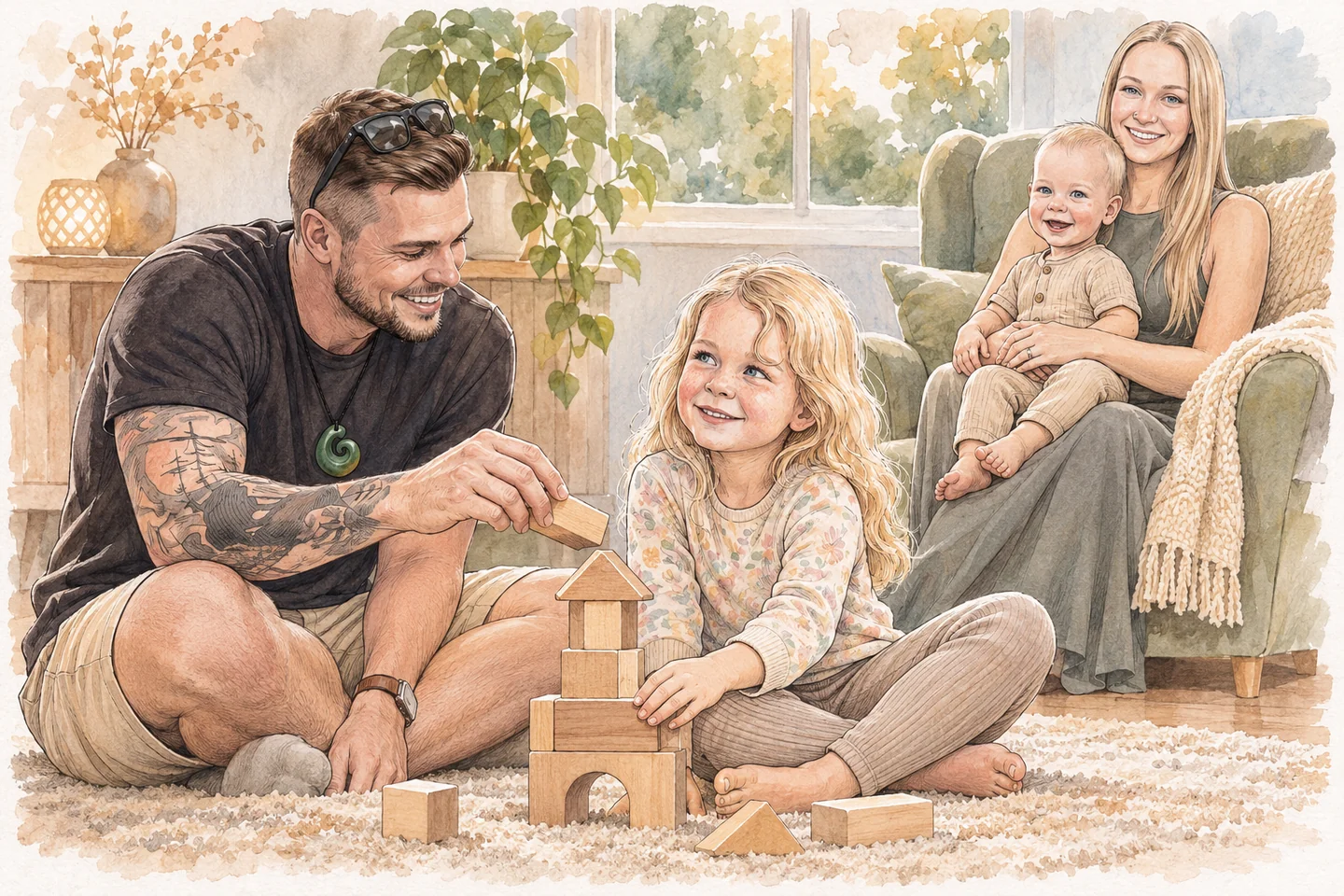
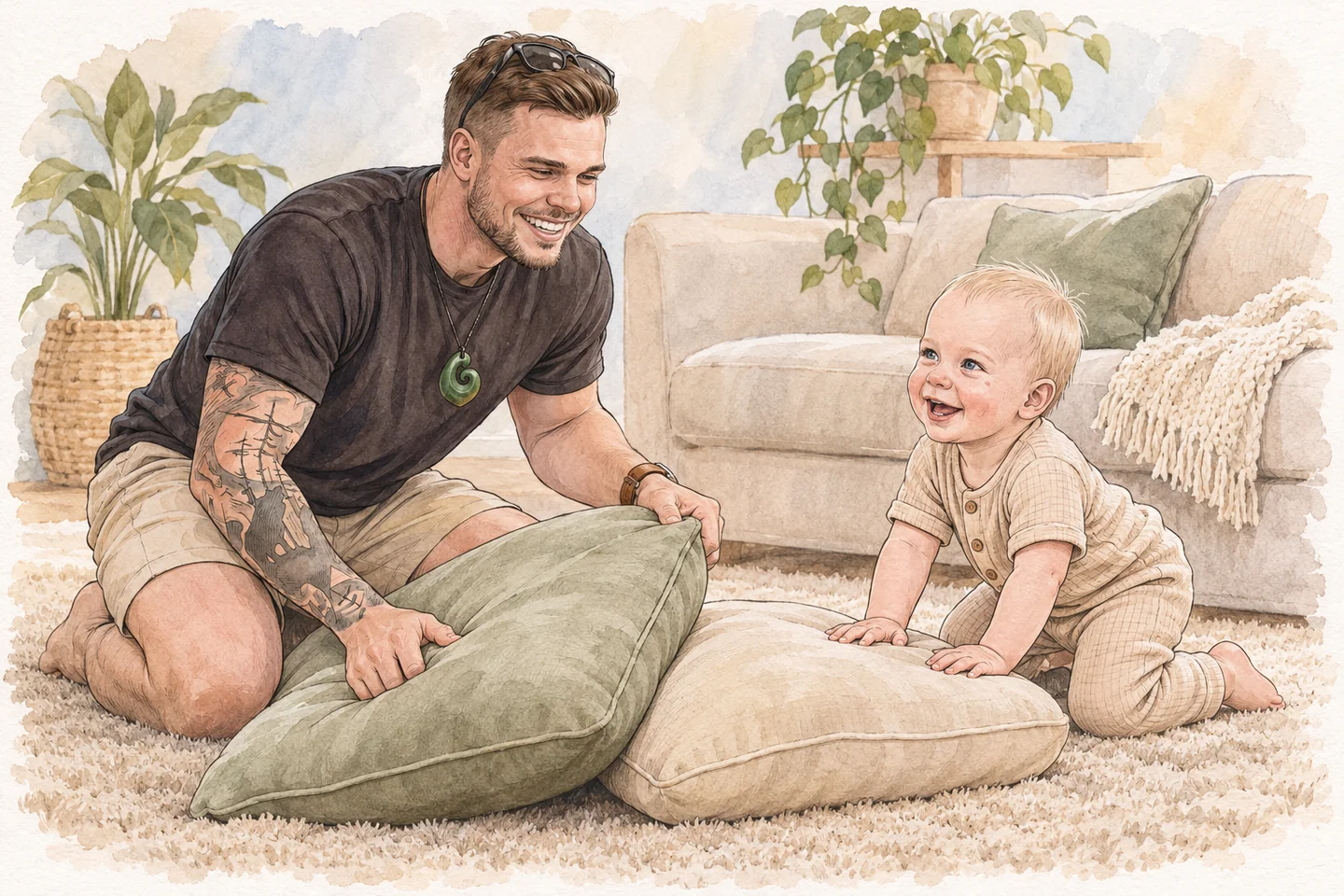
As I’m writing this, our place in Tauranga looks like a bomb just went off. There are stray couch cushions, a half-hearted blanket fort and a mountain of washing with suspicious Marmite fingerprints on it. If you were to listen in, you’d probably hear a lot of yelling, "Again!", and my knees are likely going to have a few fresh bruises by tomorrow. This is a pretty typical Tuesday afternoon at our house, when the kids have too much buzz in their bodies and nowhere to put it.
Wrestling with your kids is some of the best parenting you can do (and it’s a lot of fun, too). You don’t need to say the right thing or try to get your little ones to have a deep and meaningful chat about their feelings. You just dive into their world. This kind of big physical play isn't just about a bit of mucking around, though. For my kids, and probably yours too, it’s actually how they sort out their internal wiring when things get a bit too much.
Keeping their heads on straight with a good wrestle.
I try my best to encourage my kids to take a breath (we sniff the flowers and blow out the candles) and to use their words to describe how they’re feeling. Those are good skills to have. The problem is that they only work about half the time and are basically useless during a proper meltdown. When they are flooded with big emotions, their bodies basically take over, and their brains take a backseat. I have a daughter staring down her fifth birthday, which means that massive leap from kindy into school, and a youngest who is just starting to find his feet. Seeing them both learn how to handle their own rev, through a bit of a tumble on the rug, is pretty awesome.
That‘s where rough and tumble come in. It meets them in the physical world first. It gives them a safe spot to practice things like:
- knowing when to stop before someone gets hurt
- figuring out when they’re starting to get too revved up
- taking turns being the one in charge
- learning how to settle back down after the excitement peaks
That up-and-down rhythm is massive because they don’t get many chances to practice it elsewhere. It’s the same skill they need when they’re navigating Kindy, dealing with siblings or just trying to get through a long day without their emotions taking over.
Why does crashing into the furniture actually calm them down?
If you have kids like mine, who body-slam the beanbag or try to climb the door frame, you’ve probably wondered where on earth they get the energy. You might think they’re running on a limitless battery, but often, it’s actually a desperate craving for sensation. Occupational Therapists (OT’s) call this proprioception, which is basically the muscles and joints sending a “where am I?” signal to the brain. Some kids need a lot more of that signal to feel grounded. That’s why they love pushing, pulling and climbing. It shifts their body state first, and then the brain has a chance to catch up. I see it with my two all the time; a quick burst of big play and suddenly they’re not as frantic (or feral, depending on the day). They can actually sit down for a minute without falling to pieces.
If you’re wondering when to actually get stuck in, I find it works best in small doses: think of it as a snack, not a full-on feast. Ten or fifteen minutes is usually plenty to help them feel right again. In our house, we use it as a tactical reset before things get tricky, like that dangerous window before dinner when everyone’s hungry, and nobody can find their patience. But the landing is the most important part. You have to finish with a cuddle or a quiet minute on the couch. If you skip that, you just end up with a kid who is still buzzing when it’s time for bed. A timer is a lifesaver (“Hey Siri, set a 10-minute timer!”). It turns "STOP" into a simple fact rather than me being the bad guy.
The Bandit and Bluey lesson.
There is a great Bluey episode called ‘Yoga Ball’ that shows exactly how this works. Bandit is going full-tilt with a big green yoga ball, and Bluey is loving it. But Bingo is younger and doesn’t need the same level of roughness. She ends up sad because she doesn’t know how to tell him it’s too much. Chilli has to step in and teach her the "big girl bark." It’s a way for her to set a hard boundary without ruining the fun. As soon as she says it, Bandit stops and changes the game. That is exactly how it should work in our houses: physical play only works if the adult is the container. You have to watch their faces, pause at the first sign of a frown and stop the second anyone says the word "freeze." It teaches kids that their boundaries actually work and should be respected. That’s the kind of lesson that stays with them long after the game is over.
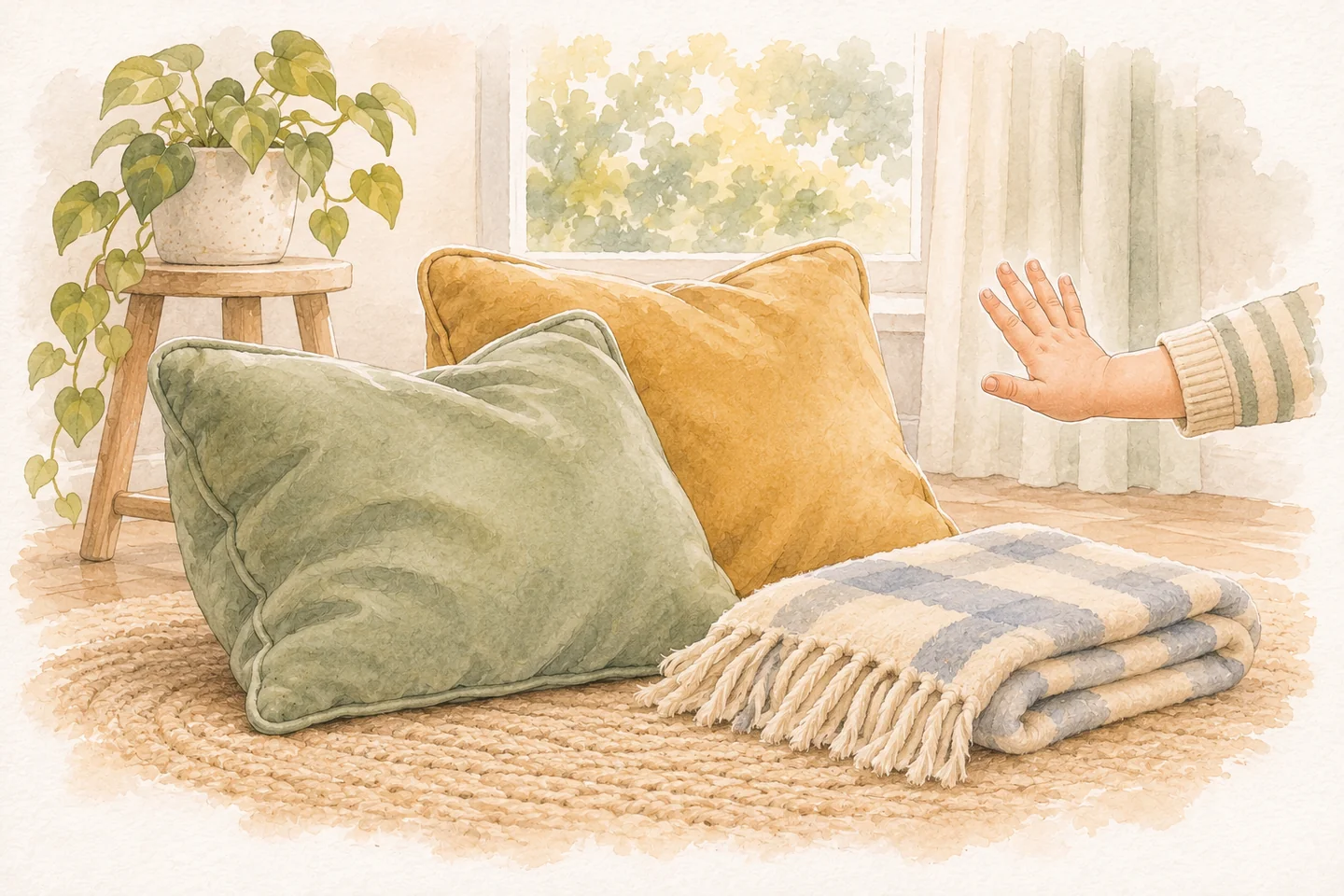
A few easy ways to start!
You don’t need any special gear for this, just a bit of floor space and a willingness to look a bit ridiculous.
- The Squashy Sandwich: Put a couple of couch cushions on top of them and give them a bit of a squish (always checking in to make sure they’re still into it). I normally describe the sandwich I’m making.
- Sock Wrestling: Both of you stay on your knees and try to pull the other person's socks off. It’s great for practising boundaries without things getting too wild.
- Laundry Haul: Put a heavy pile of towels in the basket and let them drag it across the carpet like they’re on a mission. I usually tell them I bet they can’t do it any faster.
It’s not just mucking around, it’s how we show up.
A lot of parents (especially dads) find it easier to connect through doing things rather than talking about them. Piggybacks, chasing and wrestling are amazing ways to show up and connect with our kids. People sometimes dismiss it as just mucking around, but I’ve seen enough happy kids to know the research is right on this one. When it is safe and playful, it builds massive trust. At the end of the day, a good wrestle is just a solid way to tell your kids you love them without having to make a big deal out of it. Set some basic rules, keep an eye on their cues and just enjoy the squeals.
Knowing when to tap out.
Wrestling should be a laugh for everyone involved. If things start getting a bit hairy, or if your kid ends up properly overwhelmed every single time, you have to change tack. If the word "STOP" gets ignored (by you or them), or if that playful energy flips into actual anger, it’s time for a breather. It doesn’t mean you’ve failed; it just means the current setup isn't quite working for their nervous system at that moment on that day. If your little one really struggles to handle the big physical stuff without losing the plot, it might be worth having a yarn with your GP or a paediatric OT. They can help figure out if there is a sensory thing going on that needs a different approach (or maybe just a different game). For most of us, though, a good wrestle is just a solid, low-cost way to get everyone on the same page. It fixes the moods and builds those bonds. So next time they ask for one more wrestle, just clear the coffee table and say yes.