Earlier this year, a pretty alarming school survey landed in the news. A survey of 120 Auckland primary and intermediate schools found nearly 90 per cent were seeing increasing numbers of children arriving at school without some of the basic skills they need to get through the day. We’re talking dressing themselves, using the toilet independently, holding a pencil, talking confidently and recognising the letters in their own name.
Source: NZ Herald, 3 February 2026. Read the NZ Herald report
I’m a qualified teacher myself, and I’m friends with a lot of teachers. What worries me is how closely that survey matches what I keep hearing from them. Kids are arriving at school needing much more help with the basics than they used to. That puts teachers in a difficult spot, but I’m more worried about the kids. Starting school is already a massive transition. It’s a lot to ask a five-year-old to learn letters, sounds and numbers while they’re also burning through brainpower just to sit comfortably on the mat, remember what they’ve been asked to do or open their own lunchbox.
We can’t leave all of that at the school gate. School readiness is something whānau, ECEs, schools and communities build together.
We might be looking at the wrong end of the tree
When most of us picture a child who’s “ready for school”, we think about the obvious stuff. Writing their name. Knowing some letters. Counting. Maybe recognising a few words. Those are the fruit hanging off the tree. Underneath is a much bigger root system. Can their body stay upright comfortably while they listen? Can they control their hands well enough to use a crayon or scissors? Can they hold onto a short instruction and make sense of the sounds they hear? Can they explain what they need, cope with a small setback and have another go?
Those are foundational skills. I’ve spent the past year working with the Ready 4 Learning Trust on this stuff and one idea has completely changed how I look at school readiness: automaticity.
Admit it, you still turn the music down to park
Think back to when you first got your restricted. Both hands welded to the wheel. Constantly checking the speedo. Mirrors, indicator, lane position, gears. Your brain had nothing spare. Even now, admit it, you probably turn the music down when you’re parallel parking somewhere tight. The driving suddenly gets harder, so your brain quietly bins the extra noise. Most of the time, though, driving has become automatic. You can follow the road, indicate, brake and check your mirrors while listening to a podcast and mentally rearranging your to-do list.
Automaticity is when a skill that once needed heaps of conscious effort starts happening with much less thought. Kids need that same shift with the smaller skills underneath learning. If they’re concentrating incredibly hard on gripping a pencil, there’s less attention left for forming the letter. If sitting upright is physically exhausting, listening to the teacher at the same time becomes a much bigger ask. For a five-year-old, freeing up that attention can make a huge difference. The more of those background jobs their brain can handle automatically, the more capacity they’ve got for whatever the teacher is trying to show them next.
The stuff that doesn’t look like school preparation
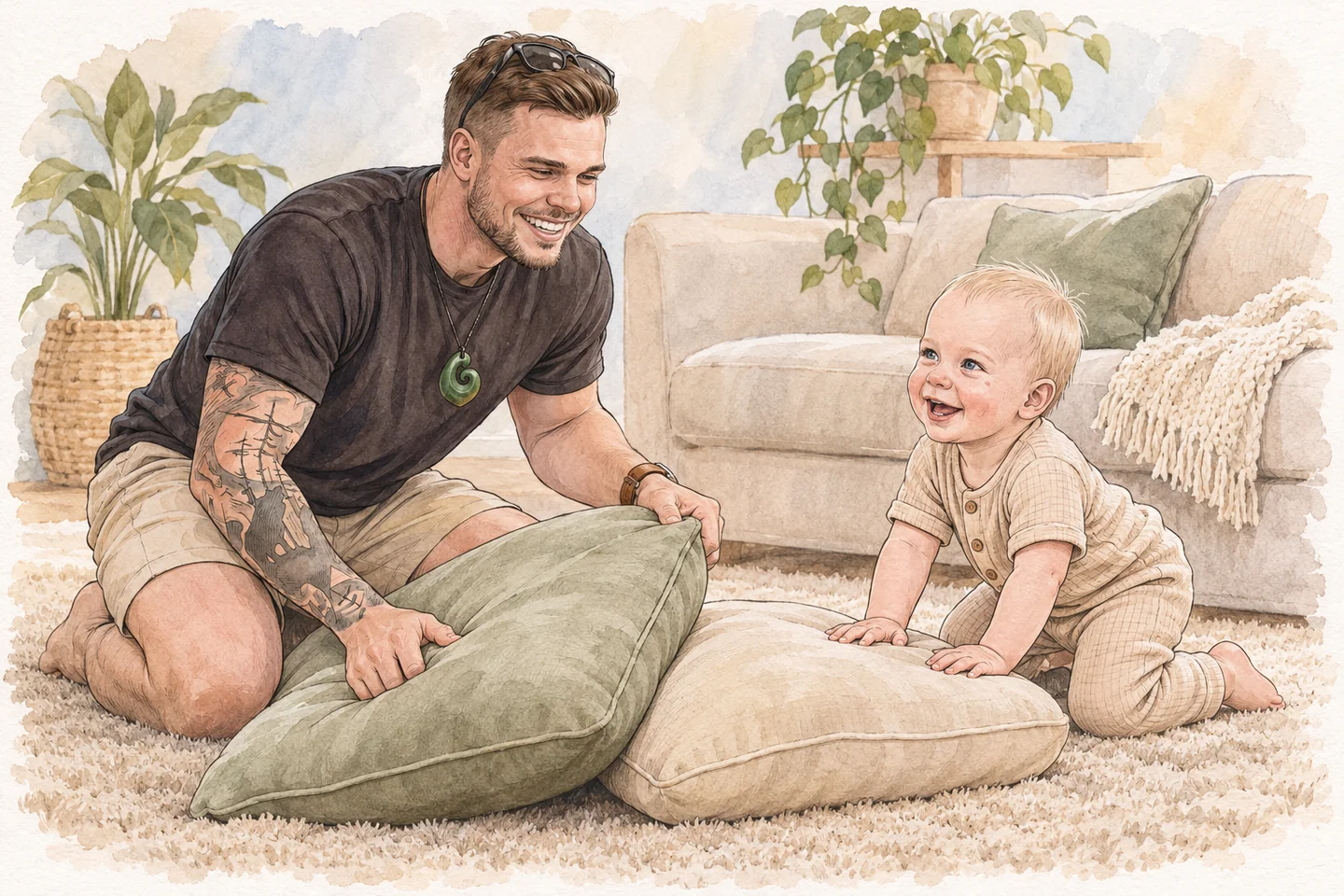
This is the nice bit for parents: most of it costs nothing. A lot of these foundations can be built at home without adding another big job to the week. If you want more ideas than I can squeeze in here, I’ll point you towards a super useful resource (The Ready 4 School Playbook) at the end. Take sitting upright. It looks like nothing. No adult finishes a meeting thinking, “Excellent work, core muscles.” But holding a little body steady takes strength, balance and constant tiny corrections. A child who keeps melting onto the floor gets a lot more benefit from climbing, crawling, swinging and balancing than from being told to “sit nicely” again.
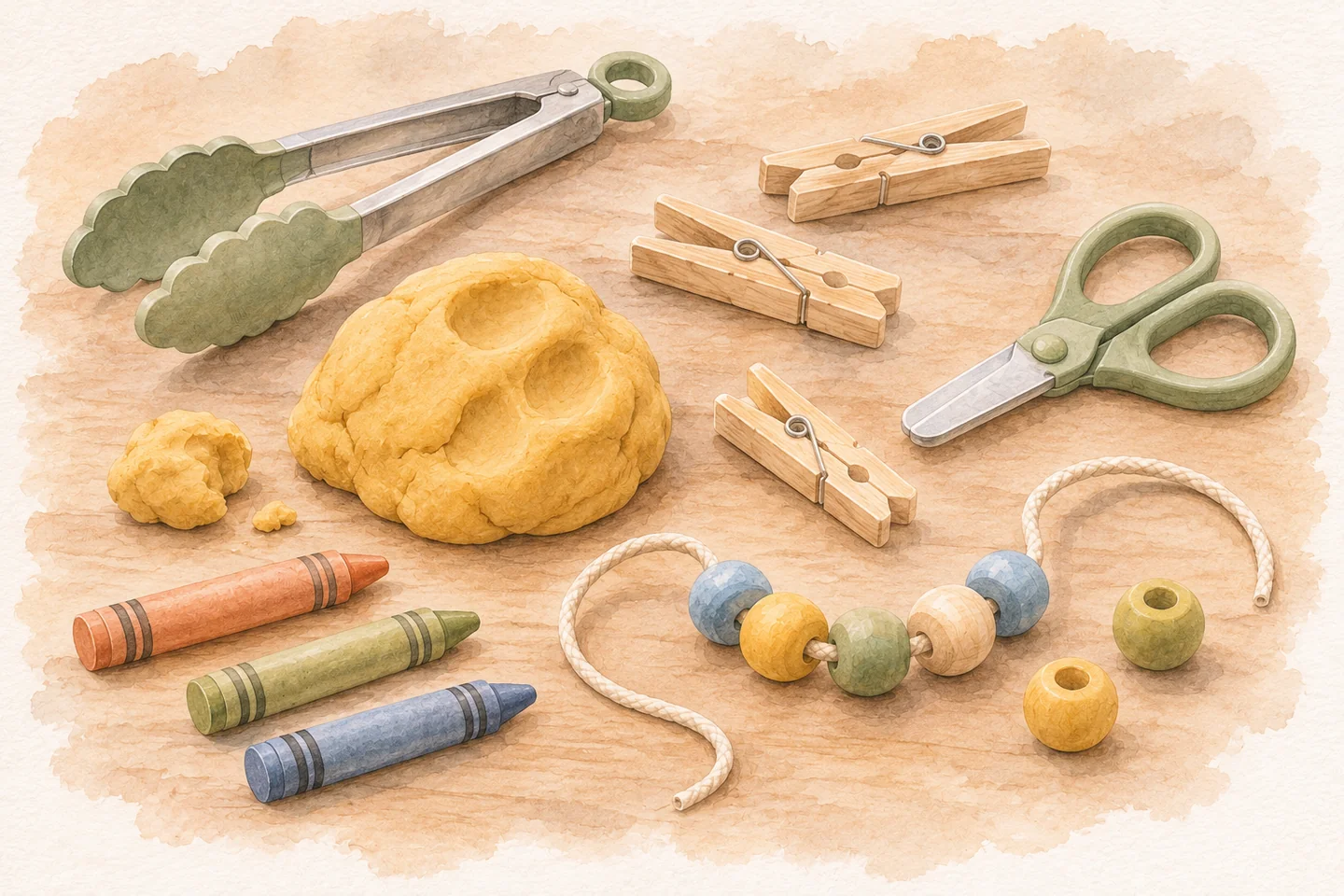
Hands need the same sort of mileage. Playdough, Lego, pegs, tongs, threading, zips, containers and cutting all make those little muscles work. Like any other muscle, the hands and fingers get stronger and more coordinated by actually using them. Eventually the physical job of controlling a pencil takes less effort. Ears and eyes are practising too. Before phonics (which is basically matching written letters with their sounds), kids need to notice sounds and patterns in language. Clap or stomp along to music, make up terrible rhymes in the car or give a short instruction and see if they can hold onto it.
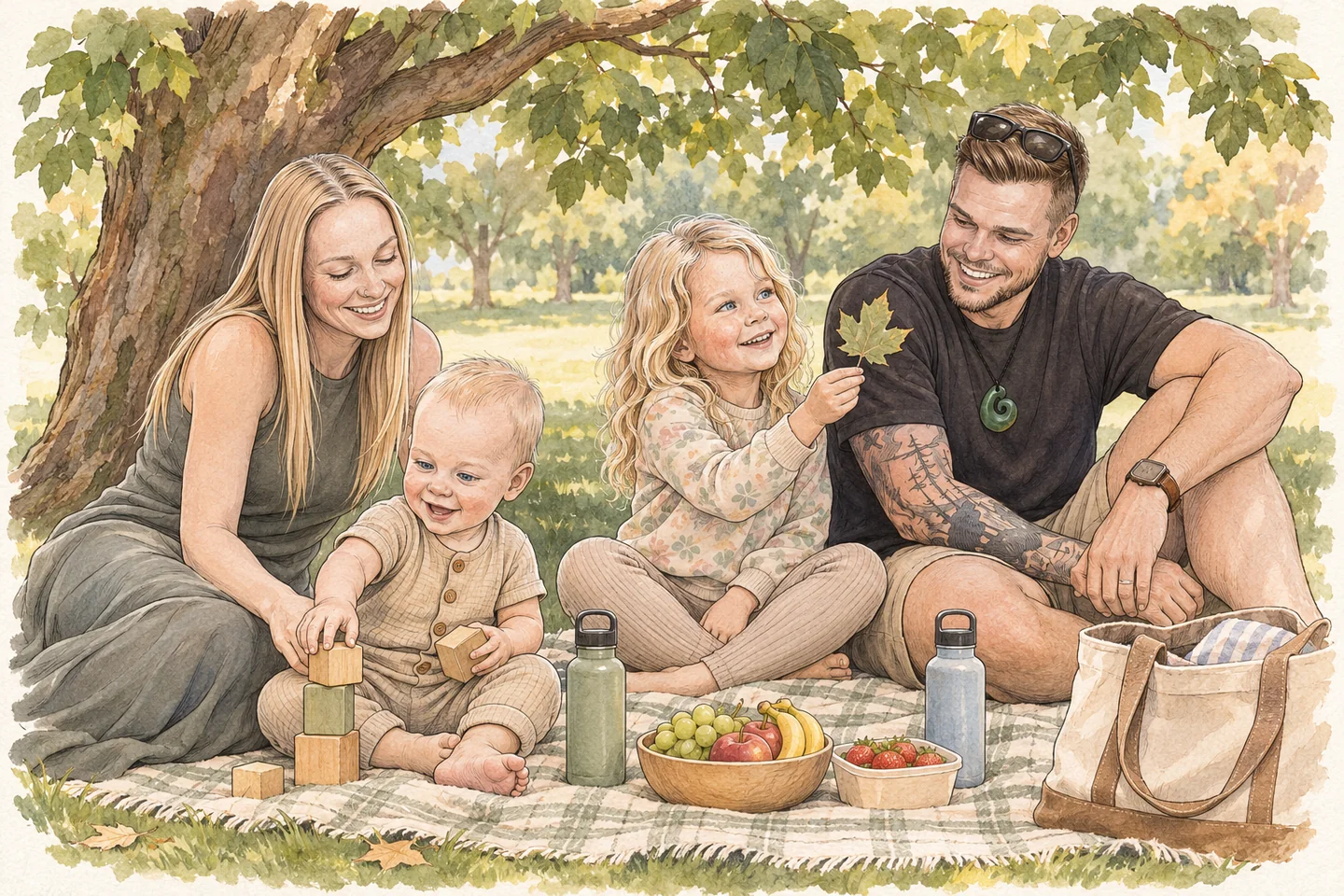
Puzzles, I Spy and sorting games give their eyes practice at spotting small differences. And then there’s talking. A child can’t easily write a story they can’t yet tell, and they need words for everything from joining a game to explaining why they’re upset. Chat while you cook or drive. If they say, “Dog running”, reply with, “Yep, that big dog is running really fast.” You’ve modelled a bigger sentence without turning it into a lesson! Read the same books until you’re absolutely sick of them. Do the silly voices. Pause before the part they know and let them fill it in. Ask what they think is going to happen next.
Then do the bit I’m personally terrible at: stop talking. Give them a few seconds to build their answer before you jump in and answer your own question.
Let them do the slow, annoying bit
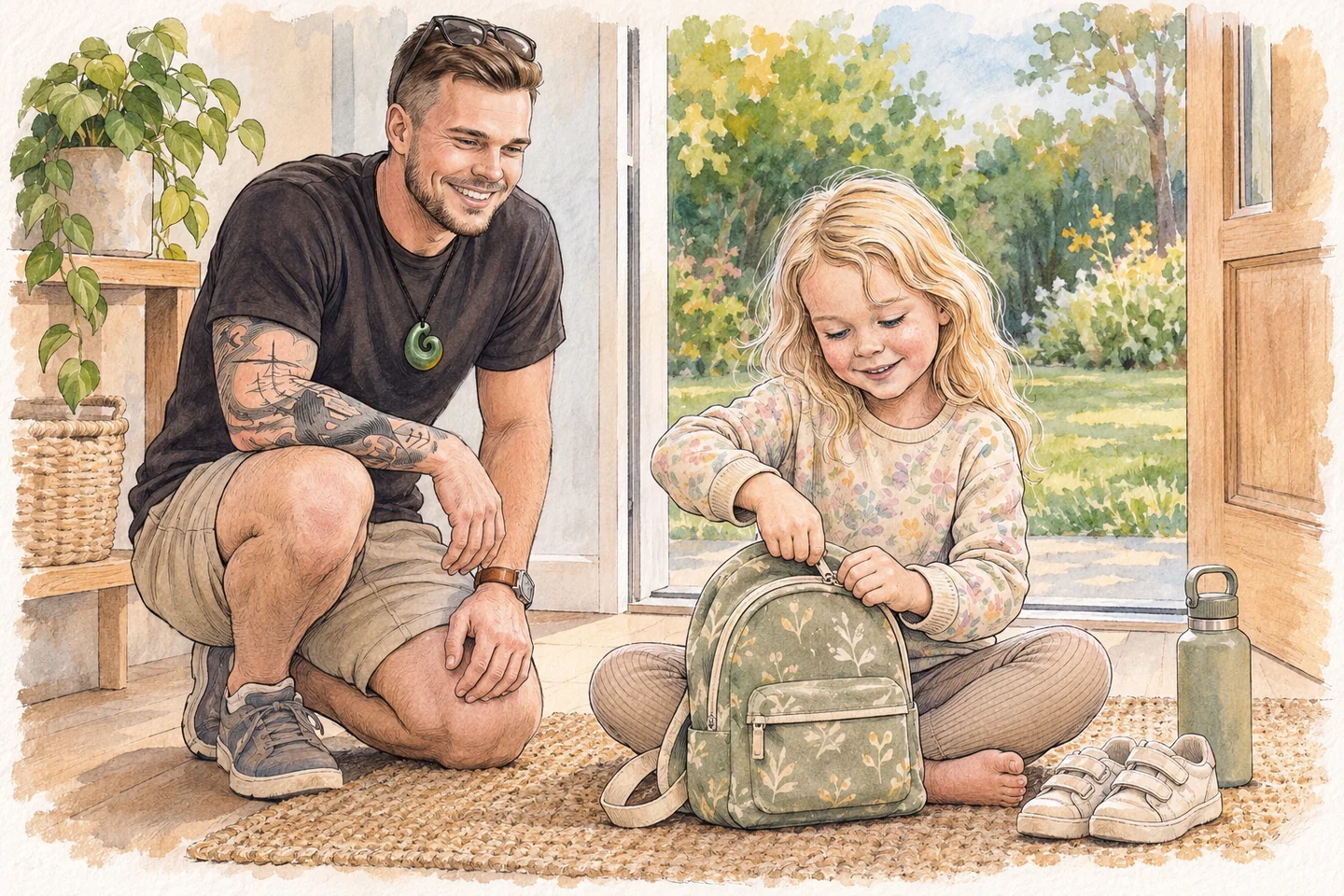
A surprising chunk of getting ready for school is all the boring everyday stuff that would be much faster if we just did it ourselves. Opening the lunchbox, putting on shoes, carrying the bag, doing up a zip and remembering the drink bottle all count. Pick one small job and properly hand it over. Maybe they become the official Guardian of the Drink Bottle. Show them what to do, then give them enough time to actually do it. This is the annoying part. You’re standing at the door watching a four-year-old fight with a zip you could fix in two seconds.
Start getting ready earlier. And when they get stuck on something safe but tricky, wait longer than feels natural before rescuing them. Count to 30 in your head. Somewhere around second 15, they’ll often turn the puzzle piece, shift their foot or try another way. If they still need help, give them a clue or step in. Give their brain a decent chance to attempt the problem before yours takes over. Those little “I worked it out” experiences start stacking up.
Please don’t turn this into homework!
There’s an obvious danger here. You finish this article, panic slightly and by tomorrow your four-year-old is enrolled in the Household School Readiness Intensive Programme with seventeen daily learning objectives. Please don’t! These skills grow through short, repeated bits of normal life. Kids play, climb, talk, help, struggle with things and try again. Repetition slowly turns “this takes all my concentration” into “I just do this”. And remember, kids develop unevenly. One might be incredibly confident physically and need more support with language. Another might happily talk the ears off anyone nearby but still hold a crayon like they’re trying to stab the table.
A useful next step is enough. Nobody needs a perfect five-year-old.
If you want somewhere to start
I’ve been working with the Ready 4 Learning Trust on a resource for parents called the Ready 4 School Parent Playbook + Activity Finder. It breaks school readiness into five areas: Movement, Hearing, Seeing, Speaking and Social & Emotional skills. There’s a simple check-in to help you spot where your child might benefit from a bit more practice. From there, the Playbook and online Activity Finder give you clearly labelled, playful activities matched to those areas. They’re short, practical and designed around things you can do at home.
You don’t need to do the whole thing. Pick something useful, repeat it and come back when you’re ready for another idea. If you’ve got a three, four or nearly-five-year-old, Google “Ready 4 School Playbook”. If we want more kids arriving at school ready to thrive, this can’t be a clean-up job we leave for New Entrant teachers in Term One. It gets built at home, at kindy/daycare and out in the community, one ordinary little bit of practice at a time. Those roots belong to all of us.